
July 13, 2026
AI Fraud: Protect Yourself from Deepfake Scams
Artificial Intelligence is rapidly changing the way we live and work and creates new opportunities for scammers to launch even more convincing attacks.



Login
Close
Close
Share:


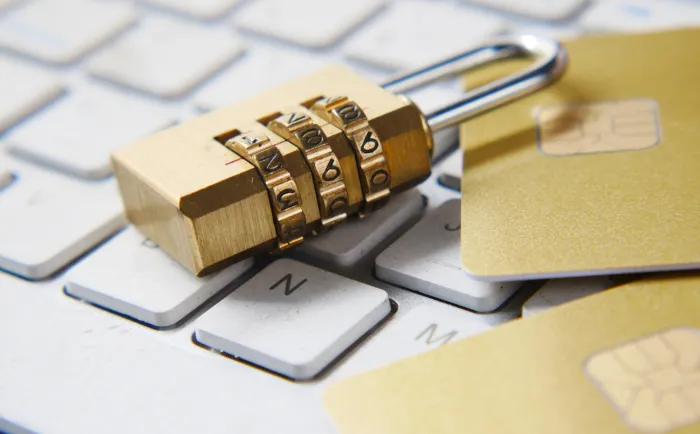
Static passwords alone are no longer a viable tool for identifying customers, according to ICBA Payments’ Alan Nevels. With payments fraud rising year after year, and consumers becoming more comfortable with making payments online, the importance of authentication has never been more crucial.
Studies indicate that approximately 80% of today’s data breaches are the result of weak passwords. The wide-ranging fraud schemes centered on deceiving consumers into providing sensitive personal information have supplied fraudsters with an assortment of customer data points, which has fueled the uptick in identity theft.
Multi-Factor Authentication (MFA) offers a protection layer for customer verification and is one of the most powerful and cost-effective means for identifying users.
There are three main variants associated with MFA: something that is identifiable (like a PIN or Password), something in possession (like a phone), and something characteristic (such as fingerprints).
Here are commonly accepted and effective authentication methods. We’ll briefly explore these methods and the pros and cons of each.
Short Message Service (SMS) involves sending a unique one-time-passcode or text phrase to a mobile device to confirm access or verify financial transactions.
Push Notifications send a notice to an application prompting the user to approve access attempts. Notices regularly provide data elements (time, location, and device type) for validation before acting.
Biometric Authentication is dependent on unique biological characteristics and traits (fingerprints/facial features/eyes) to verify identity.
Behavioral Authentication (BHA) verifies a user based on recorded device interaction, such as how the device is held and the cadence or pressure points when typing.
QR Codes are used more often for financial transaction verification, access to website applications and related information, and enabling devices to act as TV channel remotes.
The benefits and negligible cost of MFA are clear when weighed against the risk and associated cost of a data breach stemming from weak and compromised credentials. Criminals are getting more sophisticated. Fortunately, the technologies for matching their persistent fraud schemes and thwarting their attacks are up to the challenge.
July 13, 2026
Artificial Intelligence is rapidly changing the way we live and work and creates new opportunities for scammers to launch even more convincing attacks.